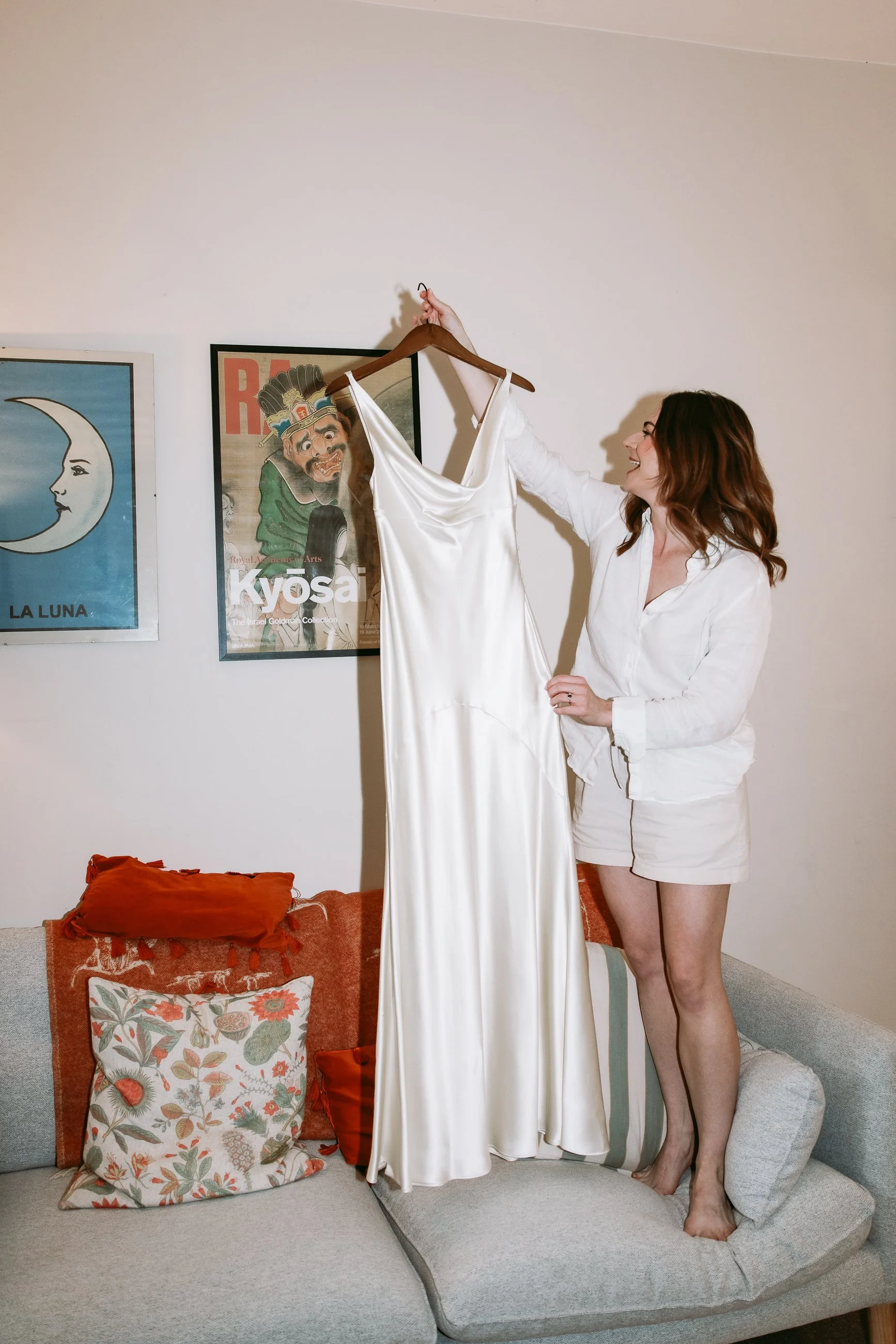
Choosing your wedding dress is one of the most exciting parts of planning a wedding, but it's also a decision that can have a huge impact on how you experience your big day.
The wrong wedding dress can genuinely ruin your wedding day.
A dress might look absolutely stunning in the bridal boutique, but what happens when you have to wear it for ten or twelve hours? Can you sit comfortably, walk, eat, hug your guests and dance without constantly adjusting it?
An overly tight dress, an uncomfortable corset, a train that's impossible to manage or a strapless bodice that keeps slipping down can quickly turn a beautiful outfit into a source of frustration.
As a London wedding photographer, I've seen how much difference the right dress can make. Your wedding day should be about celebrating, enjoying yourself and being present in the moment, not worrying about your outfit every five minutes.
That's why I've put together this practical guide to help you choose a wedding dress that not only looks beautiful but also feels comfortable and allows you to enjoy your wedding day to the fullest.
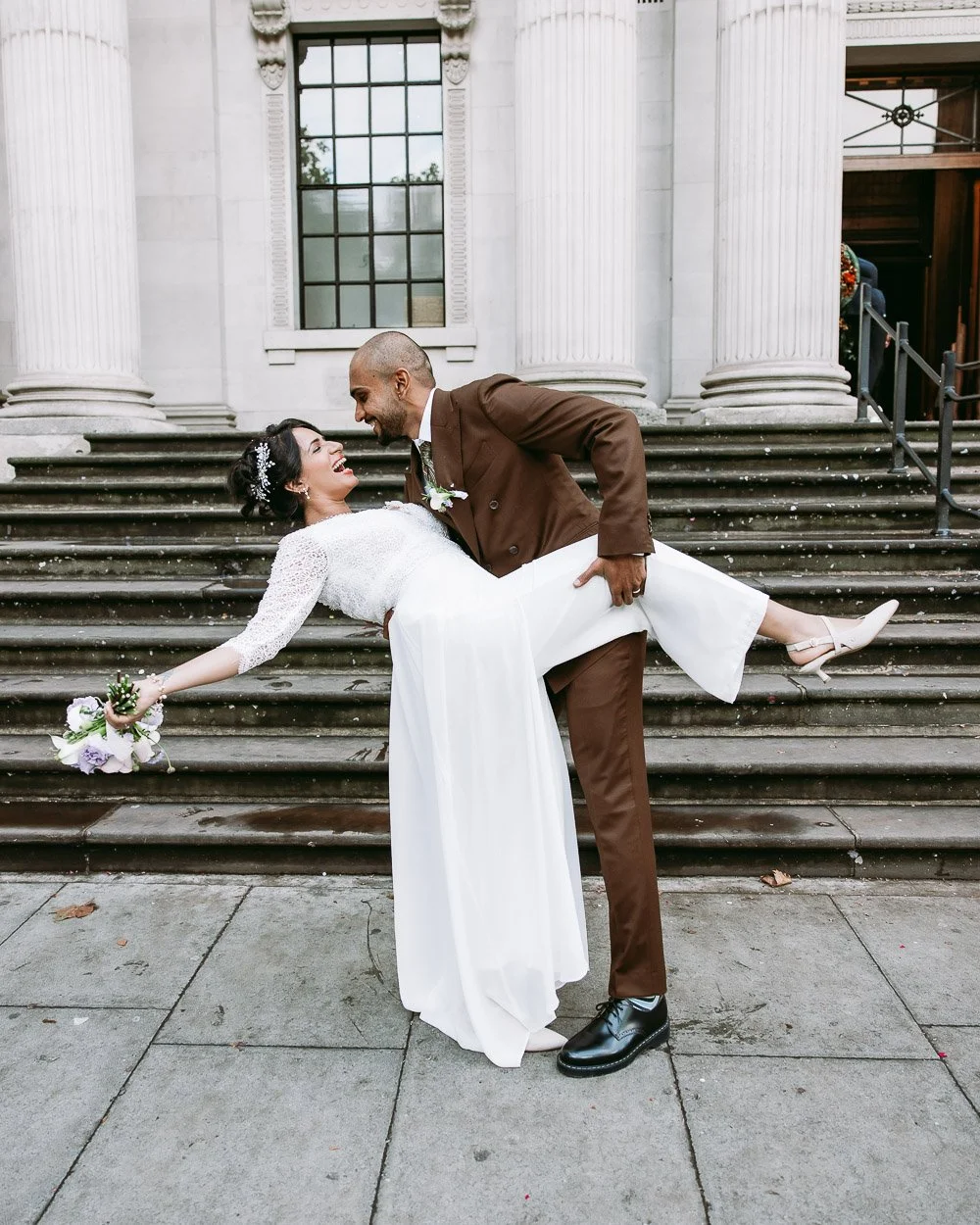
is it comfortable?
Comfort is the most important thing when choosing a dress, because when it isn’t, it might ruin your day as the focus would be on your body in discomfort rather than on enjoying your day. Throughout the years I have seen one too many brides that chose a beautiful dress but couldn’t focus on their most beautiful day because they were constantly adjusting a dress that was either falling or needed constant lifting or where the train was dropping and couldn’t be attached to the button (i will expand on trains later)
I personally think, to have the best experience, a wedding dress should be
not too heavy
the right size (not too tight, not too loose)
Easy to walk in. You shouldn't have to constantly lift your dress to avoid tripping over it.
Comfortable when sitting down. You'll be sitting during the ceremony, dinner and speeches. And you might eat and drink quite a bit, that is why size matters ;) and your dress should still feel good after a big meal and 15 glasses of prosecco!
Secure and properly fitted. Straps, sleeves and bodices should stay in place without constant adjustments.
Easy to dance in. Make sure you can move freely, especially if you're planning a lively evening reception.
Practical for the venue. Think about stairs, outdoor spaces, uneven pavements and the weather.
IS the dress SUITABLE FOR season?
Most weddings take place in summer, but winter weddings are becoming increasingly popular too. When choosing your wedding dress, it's important to consider the climate of your wedding location and the time of year.
For example, if you're getting married in Tuscany in August, there's a good chance the weather will be extremely hot. Wearing a heavy dress made from thick fabrics and multiple layers could leave you sweating, uncomfortable and exhausted by the afternoon. Your makeup might also struggle to survive the heat!
On the other hand, if you're getting married at a London Town Hall in winter, you'll want to make sure your dress is warm enough, especially if you're planning to have your couple photographs taken outdoors. The last thing you want is to spend your photo session shivering in the cold.
Choosing the right fabric and weight for the season can make a huge difference to your comfort and enjoyment throughout the day.
If you're overheating or freezing, it can be harder to relax and enjoy your couple portraits and it can be visible in the final images that your face muscles are tense.
the right length
The front of your wedding dress should be the right length for your height and shoes. If it's too long, you risk stepping on the fabric, tripping or falling. You'll also spend the day constantly watching your feet instead of relaxing and enjoying yourself.
My advice: Always have your dress fitted while wearing your wedding shoes, and practise walking in it before the big day. If you're planning to change into flats for the evening, remember that your dress will sit lower to the ground.
train yay or nay?
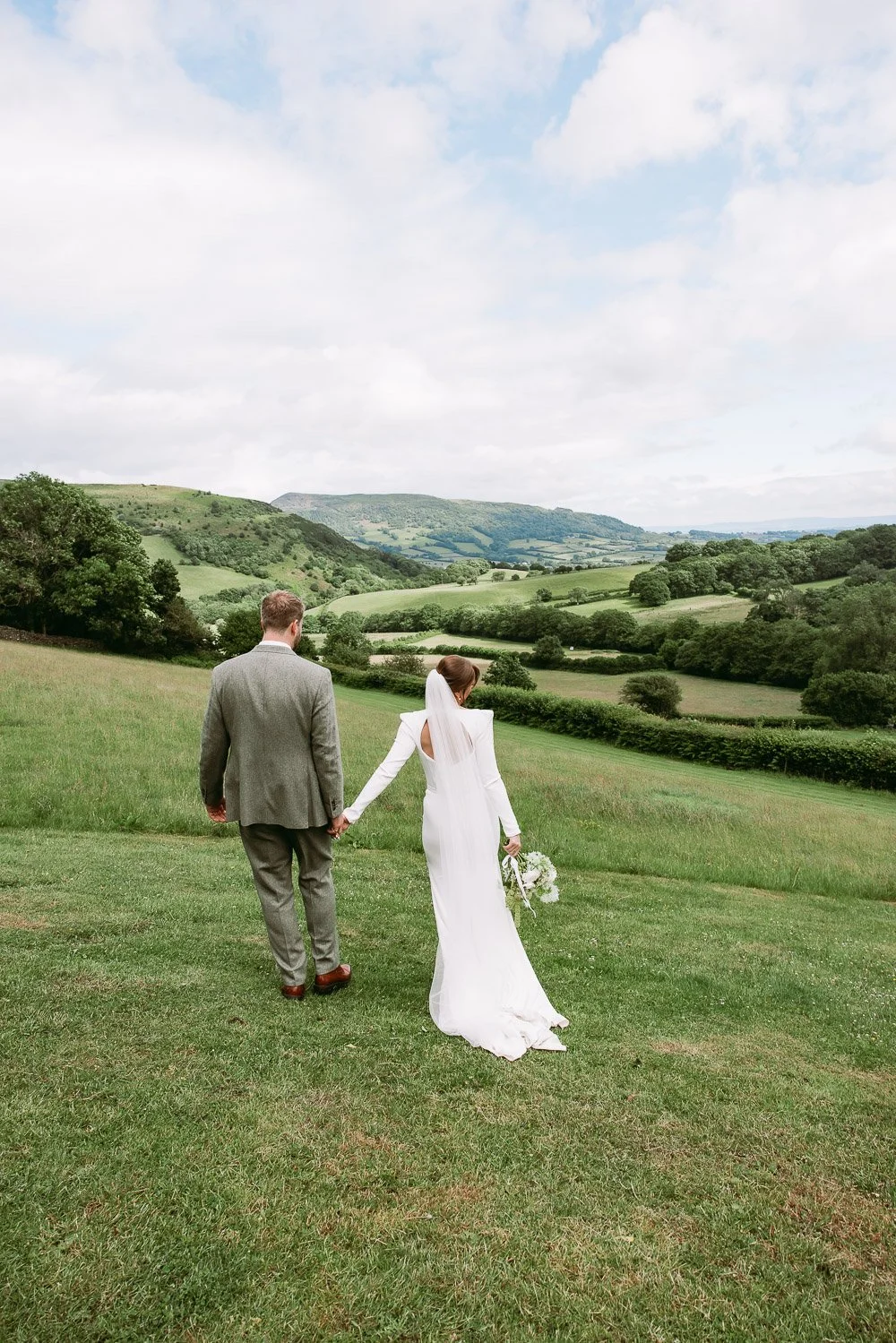
I'm always all for a wedding dress with a train! They look absolutely beautiful in photographs, BUT there's one thing you need to accept: your train will probably get dirty. Which i think is absolutely fine but not every bride likes it.
If you're determined to keep your dress immaculate until the evening, you might end up spending half your wedding day worrying about it, constantly lifting it off the ground and trying to protect it from dirt rather than simply enjoying yourself.
Most wedding dresses with trains have a button, hook or loop at the back that allows you to bustle the train for the evening. However, these don't always work as well as they should. I've seen trains repeatedly come loose, leaving brides constantly picking them up and trying to reattach them.
My advice: Before your wedding, test the bustle properly. Walk around, sit down and, most importantly, dance in your dress to make sure the train stays securely attached.
The last thing you want is to spend your wedding reception struggling with your dress instead of enjoying the dance floor!
the shoulder straps dilemma
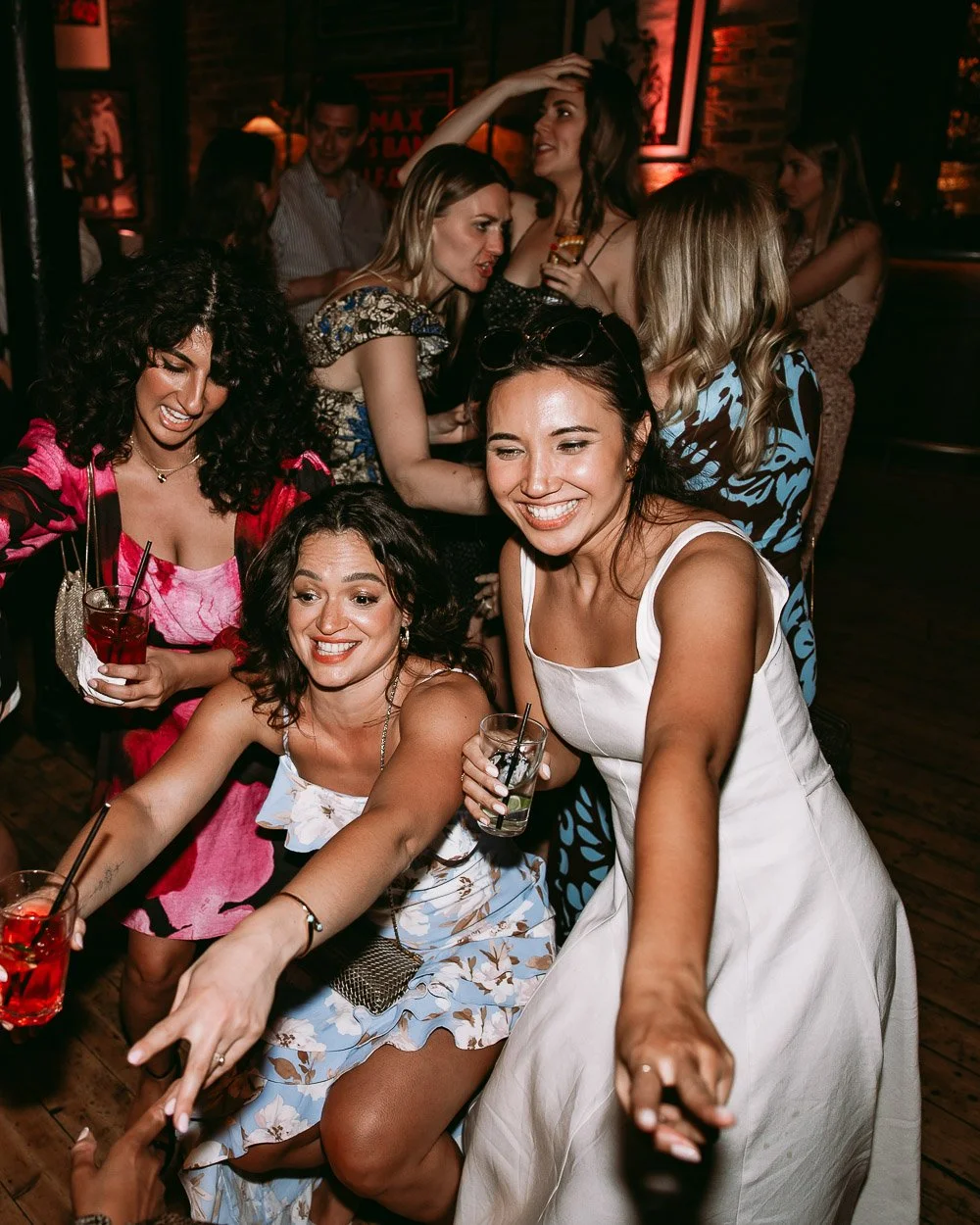
Shoulder straps can be a beautiful addition to your wedding dress, adding a touch of elegance, romance or sensuality. However, their design and positioning can have a significant impact on how freely you can move throughout the day.
Off-the-shoulder straps: These can look absolutely stunning, but if they're too tight or restrictive, they can limit your arm movements. You might struggle to hug your guests, embrace your new husband, raise your arms while dancing or even lift your bridal bouquet comfortably.
On the other hand, if the straps are too loose and need to be secured with fashion tape, make sure you're using good-quality, skin-safe tape that holds them firmly in place. Otherwise, you might find yourself constantly reattaching them throughout the day.
It's also worth testing the tape beforehand to make sure it doesn't irritate your skin and stays in place when you move.
On-the-shoulder straps: These are generally a more practical option, as they allow greater freedom of movement. They also give you more flexibility during your couple portraits, allowing for a wider variety of natural poses without feeling restricted.
My advice: When trying on your wedding dress, raise your arms, hug someone and move around naturally. If the straps restrict your movements, consider having them adjusted or choosing a different design. You don't want to spend your wedding day feeling like you can't move your arms!
Strapless dresses and bras: Strapless wedding dresses can look absolutely stunning, but they need to fit perfectly! If the bodice is too loose or doesn't provide enough support, you might find yourself constantly pulling your dress up throughout the day. And trust me, you don't want to spend your wedding constantly worrying about your dress slipping down and accidentally revealing more than you intended!
If your dress requires a bra, make sure you choose one that provides proper support without showing underneath the fabric. Some wedding dresses have built-in cups or structured bodices, so you might not need a separate bra at all.
My advice: Try your dress on with the exact bra you're planning to wear, or without one if that's how it's designed to be worn. Raise your arms, bend forward, hug someone and even dance a little. Make sure everything stays securely in place!
And remember, fashion tape is not a substitute for a properly fitted dress!
choosing the right knickers
Yes you heard it right! Choosing the right knickers is more important than you might think!
If your underwear is too tight, it can create visible lines and bulges underneath your wedding dress. And trust me, if they're visible in real life, they'll probably show up in your wedding photographs too! These details can be particularly difficult to remove during editing.
My advice is to choose seamless underwear that fits comfortably without digging into your skin. Nude underwear that closely matches your skin tone is often a better choice than white, especially underneath lightweight or slightly sheer fabrics.
Most importantly, try on your wedding dress with the exact underwear you're planning to wear on your wedding day. Check how everything looks in natural daylight, not just under the flattering lights of a bridal boutique.
what about the trip to the loo? can i do this alone?
Yes, even going to the loo can become a drama of its own if you need assistance every single time!
Choose a dress that allows you to use the toilet without needing an entire army of bridesmaids to help you. Some wedding venue toilets are surprisingly small, and there simply might not be enough room for you, your dress and three bridesmaids trying to squeeze into one cubicle!
My advice: Before committing to your dress, think about how easy it will be to lift, adjust or remove when nature calls. Ideally, you should be able to manage it on your own, or at least with minimal assistance.
The last thing you want is to turn every trip to the loo into a military operation! 😂
is the fabric actually photogenic?
Yes, some fabrics are more photogenic than others! Not because they're necessarily more beautiful, but because certain materials crease very easily.
A dress might look absolutely stunning when you first put it on, but after sitting through the ceremony, travelling in a car and enjoying your wedding breakfast, it could be covered in wrinkles.
And trust me, removing all those creases from hundreds of wedding photographs in Photoshop is no small task!
My advice: Before choosing your dress, check how easily the fabric creases. Try sitting down in it for a while and see what happens when you stand up. Some fabrics, particularly linen and certain types of silk and satin, are more prone to wrinkling than others.
THE ACCESSORIES: BEAUTIFUL OR A NUISANCE?
Accessories can completely transform your bridal look, adding elegance, personality and a touch of drama. But before choosing them, think about how practical they'll be throughout your wedding day.
Veils: Long veils look absolutely stunning in photographs, especially when caught by a gentle breeze. However, strong winds can turn them into a nightmare!
Make sure you take your veil out of its packaging well before the wedding day. Some veils arrive heavily creased from being folded, and the last thing you want is to discover this on your wedding morning! Hang it up in advance and, if necessary, have it professionally steamed or follow the manufacturer's care instructions.
Also, practise attaching your veil to your hair before the wedding day! Make sure it's securely fastened, especially if you're planning to wear your hair down. Veils can easily become loose or fall off when you're walking, hugging guests or caught in a gust of wind.
Ask your hairstylist to show you or one of your bridesmaids how to attach and remove it properly without ruining your hairstyle.
Hats and fascinators: These can be a fabulous addition to your bridal outfit, but make sure they fit securely. If you're getting married somewhere windy, you don't want to spend your entire couple photoshoot holding onto your hat to stop it from flying away!
Bridal gloves: Elegant, timeless and sometimes very glamorous, but are they practical? Think about whether you'll be able to exchange rings comfortably, hold your bouquet, use your phone or eat while wearing them. If you're choosing long or fitted gloves, practise taking them off and putting them back on.
Hair accessories: Decorative pins, combs and headpieces can look beautiful, but make sure they're securely fastened and comfortable enough to wear for several hours. The last thing you want is a headpiece constantly slipping or digging into your scalp.
My advice: Try on all your accessories together with your dress before the wedding. Walk around, move your head, raise your arms and check that everything stays in place. And if you're planning an outdoor wedding, don't underestimate the wind!
Remember, accessories should enhance your bridal look, not become another thing you have to worry about throughout the day.
and finally, last but not least, ladies and gentlemen: the shoes!
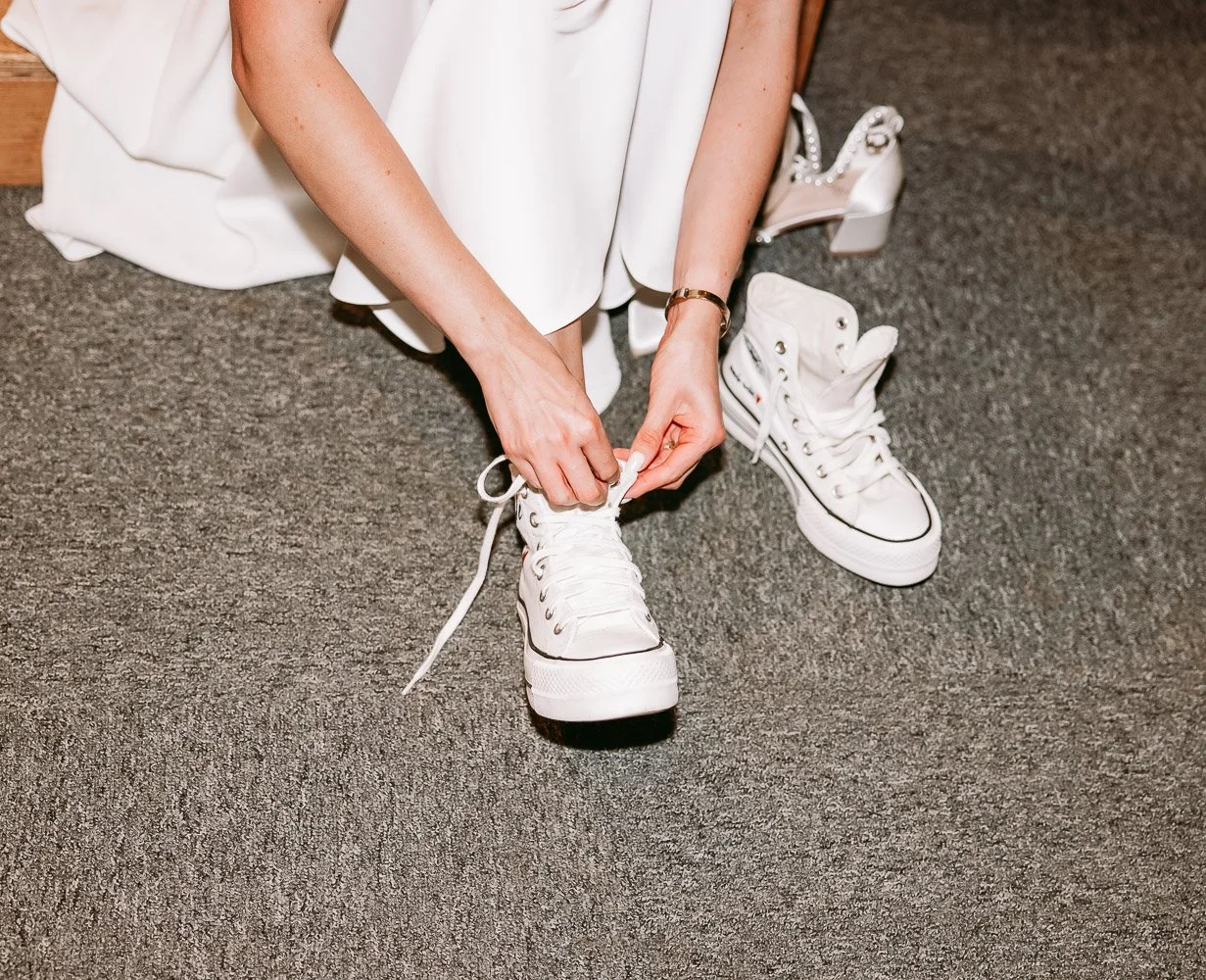
You might have found the most beautiful wedding shoes in the world, but if you can't walk in them comfortably, they could become your worst enemy!
Remember, you'll be spending hours standing, walking, posing for photographs and dancing. The last thing you want is painful feet, blisters or having to take your shoes off halfway through the day.
My advice: Break in your wedding shoes before the big day. Wear them around the house, practise walking in them and make sure they're comfortable enough for several hours.
Think about your wedding venue too. Thin heels and cobblestones aren't exactly best friends, and stilettos can easily sink into grass.
And finally, always bring a comfortable second pair of shoes! Just remember that if you switch from high heels to flats, your wedding dress might suddenly become too long.